
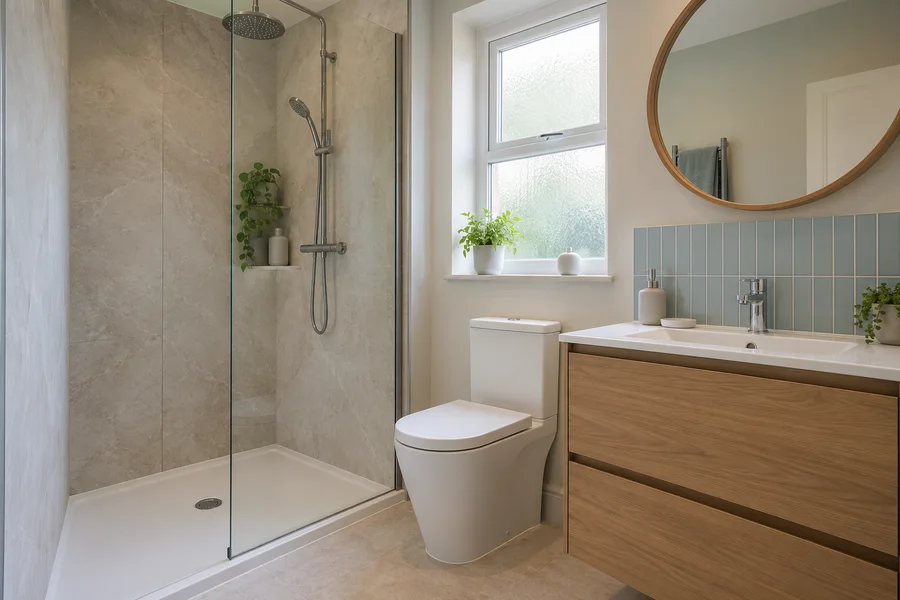
Panels and tiles both need suitable preparation, careful edges and a clear list of the fitting work. Compare the installed result and its care, rather than make the decision from a material price or a small colour sample alone.
Compare the appearance across a wall
Look at how each finish appears across a full wall. Tiles create a pattern of pieces and grout lines; panels make larger areas with the joints and trims of the selected system. A small sample cannot show the repeat of a marble effect or the number of joints around the shower. Our bathroom supply and fitting service in Dundee considers those visible choices with their installation. Keep the actual product reference, because two finishes described by the same colour name can look quite different in the room.
Start with sound walls
Neither finish should be used to hide an unsuitable or damaged wall. The existing surface, the required backing and the treatment around wet areas need assessing for the chosen products. Ask what preparation is included, especially when old tiles or a bath are being removed. We assess the wall and selected fitting system before confirming the work. The preparation must suit the actual materials, including their use around the shower or bath. A decorative finish is only one part of a shower wall, however convincing the surface looks in a photograph.
Mark the area to be covered
Mark where the new finish is intended to start and stop. A quote covering the shower enclosure alone is different from one covering the whole room. Include the area behind the basin and any wall exposed after an old bath is removed. Note the chosen height too, rather than compare quantities without knowing the coverage. This shows which walls are included before you choose colours. Once the area is agreed, the products and work can be priced for the same result rather than for different interpretations of a new bathroom wall.
Look at windows and corners
Window openings, corners and the edges of pipe boxing need finishing as part of the design. Ask to see the proposed trims or tile edges beside the main surface. A colour that works across a broad wall may look different with a contrasting strip at every junction. The point is to understand the actual detail, not to demand one method for every material. The selected product and the shape of the room determine suitable options. Include these details early instead of leaving every visible edge as a choice made during fitting.
Plan around taps and other fittings
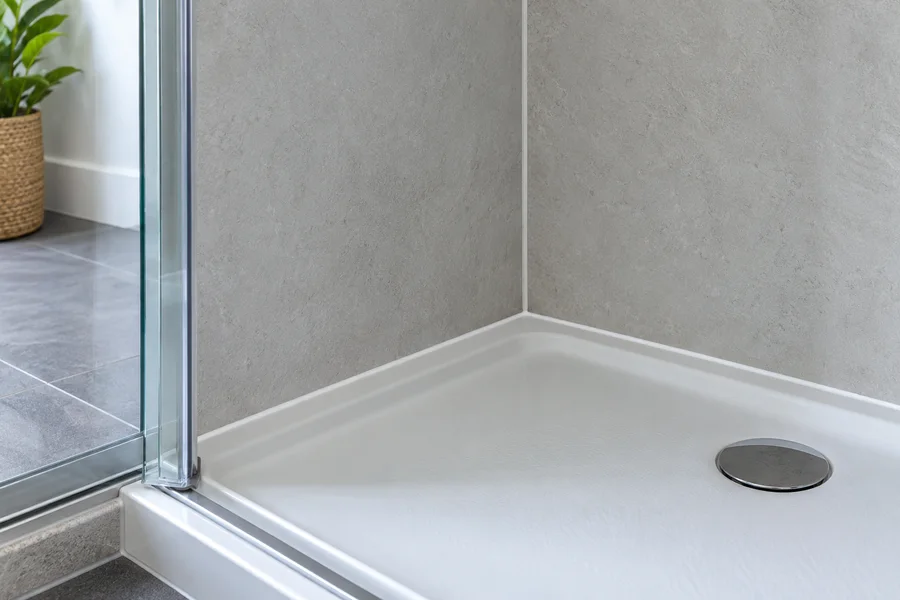
Show where taps, shower controls, rails and furniture will meet the wall. The installation needs appropriate support, openings and sealed junctions for the actual products. A change of control or furniture position can affect a finished surface, so confirm those items before fitting. Discuss any existing fitting you want to keep rather than assume its old mounting works with a new wall. These are practical reasons to choose the suite and wall finish together, even when the main appeal of the finish is its colour or texture.
Read the cleaning instructions
Read the cleaning instructions for the selected finish. Tiles have grout lines and panels have their own joints and edge details; neither removes the need for care and inspection. Check which cleaners and tools are suitable, including those used on nearby taps or screens. Think about reaching the wall behind the screen and around the bath. A finish that is easy to wipe in an open display may be harder to reach once all the fittings are in place. Keep the care information with the product details.
Keep necessary plumbing accessible
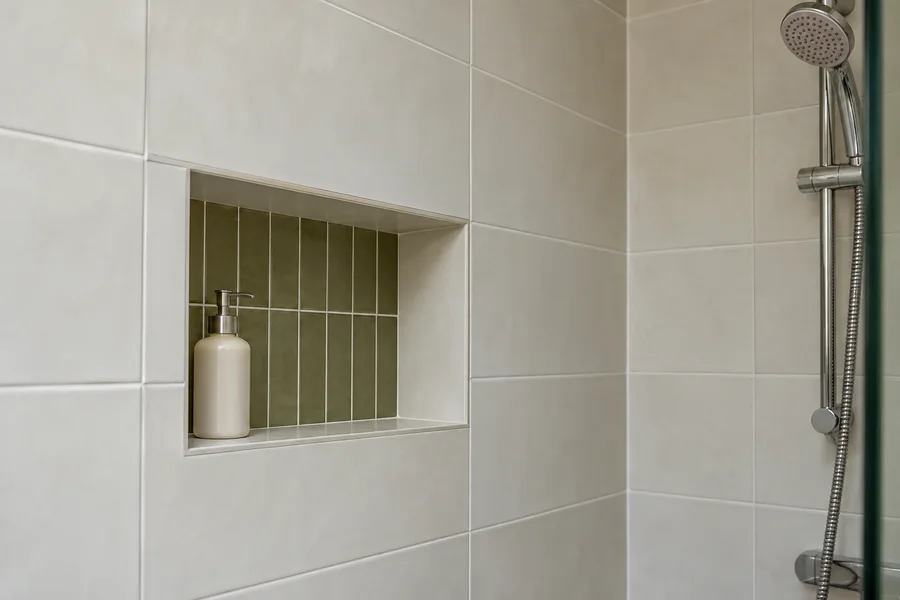
Ask how necessary plumbing access will be retained. Concealed shower controls and boxed pipes can look tidy, but a future repair may need a removable panel or another planned route. The appropriate arrangement depends on the fittings and construction. Have it explained before finishes cover the area, and ask for relevant access points to be shown at handover. This does not mean leaving every pipe visible. It means understanding how the agreed bathroom can be maintained without assuming the wall can be opened anywhere without disturbing its finished surface.
Compare full fitting costs
Compare the cost of the installed wall, not only a tile or panel price. Preparation, coverage, fitting, trims, joints and disposal can change the total. Our bathroom cost guide explains how surfaces fit into the room budget. When comparing bathroom quotes, keep those wall areas and details the same. Otherwise a cheaper total may simply describe less work, and a more expensive material may be only one of several differences between the two proposals.
Keep product references and spare pieces
Save the exact product names, colour references and any useful batch information supplied. Ask whether keeping spare tiles or a matching trim would be sensible, and store them safely if agreed. Future availability can change, so a remembered description such as grey marble is not a reliable product record. Keep the cleaning and warranty documents with those references. Product terms and fitting terms may differ; read the actual information provided. This record is useful for later questions even when no spare material is needed at the end of the job.
Choose the finish beside the floor and furniture
Finish the choice beside the floor and furniture rather than judge the wall alone. Hold suitable samples in the room's light and look at the pattern scale together. You may prefer one textured wall with calmer surfaces nearby, or a simpler continuous finish. We design, supply and fit the agreed bathroom, so the selected materials sit in the same proposal as the products and work. Bring a look you like and the amount of upkeep you are comfortable with; those details help make the finish a practical choice for your room.